blog


Field Notes from the Cultural Apothecary

Comment

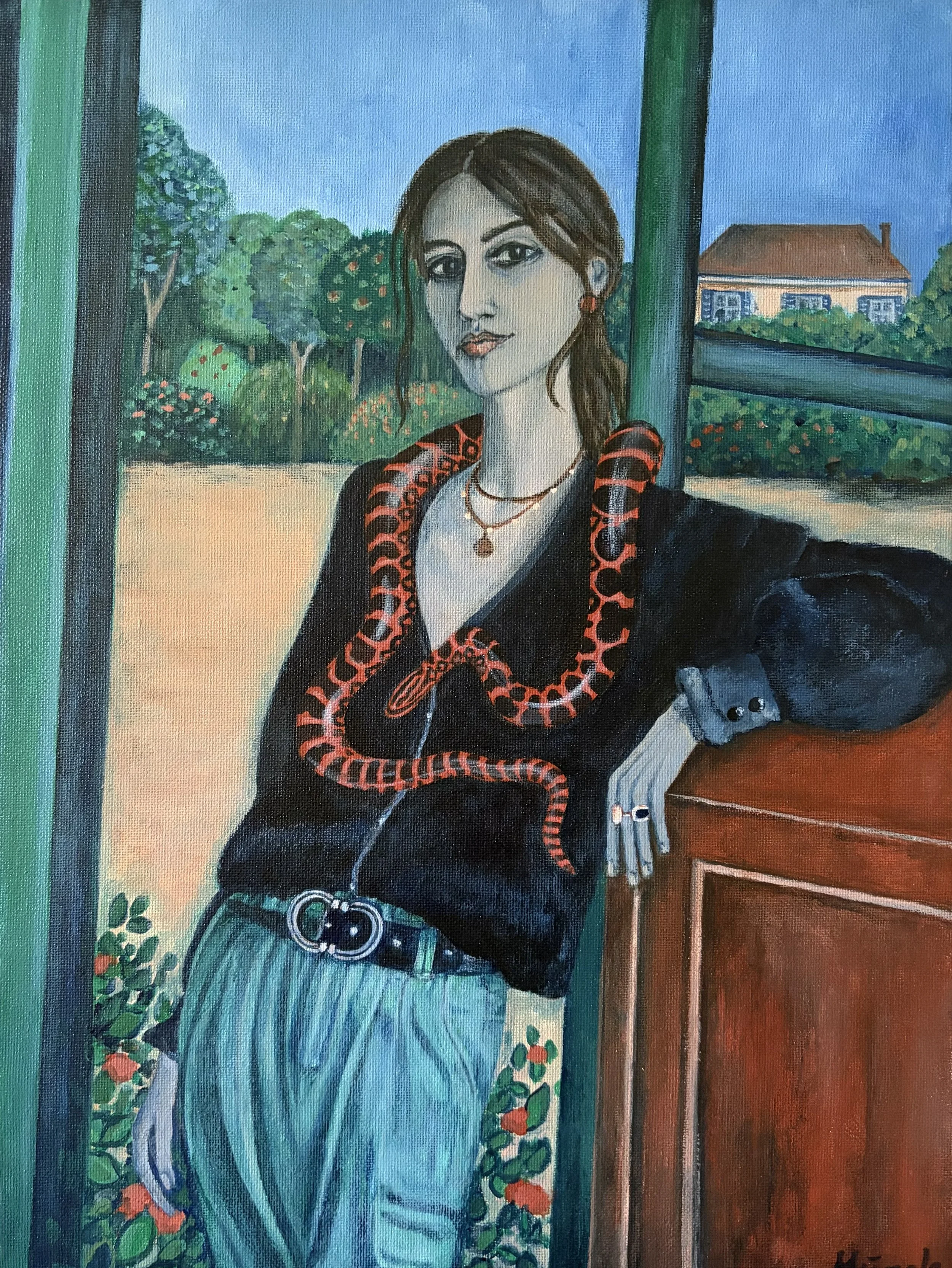
The Woman and the Snake

In Aesop’s old fable, a man finds a snake dying from the cold. Moved by compassion, he takes it to his breast and gives it warmth. The snake revives - and bites him.

Centuries later, Oscar Brown Jr. drew on the same tale for his song The Snake, a story Shivaree would later revisit in their own recording. This time it is a tender-hearted woman who takes the creature in, warms it and cares for it. When the snake finally turns on her, its answer is mercilessly simple: she knew what it was from the beginning.

A snake remains a snake.

But perhaps the older lesson reaches further than that.

Compassion does not necessarily change the nature of what receives it. Kindness is not a spell. We may recognise something for what it is and still imagine that love, rescue or proximity will make it otherwise.

The snake may never have hidden its nature.

Perhaps the greater danger lies in what we choose not to see.
Comment

Jaguar Night

Comment

Jaguar Night

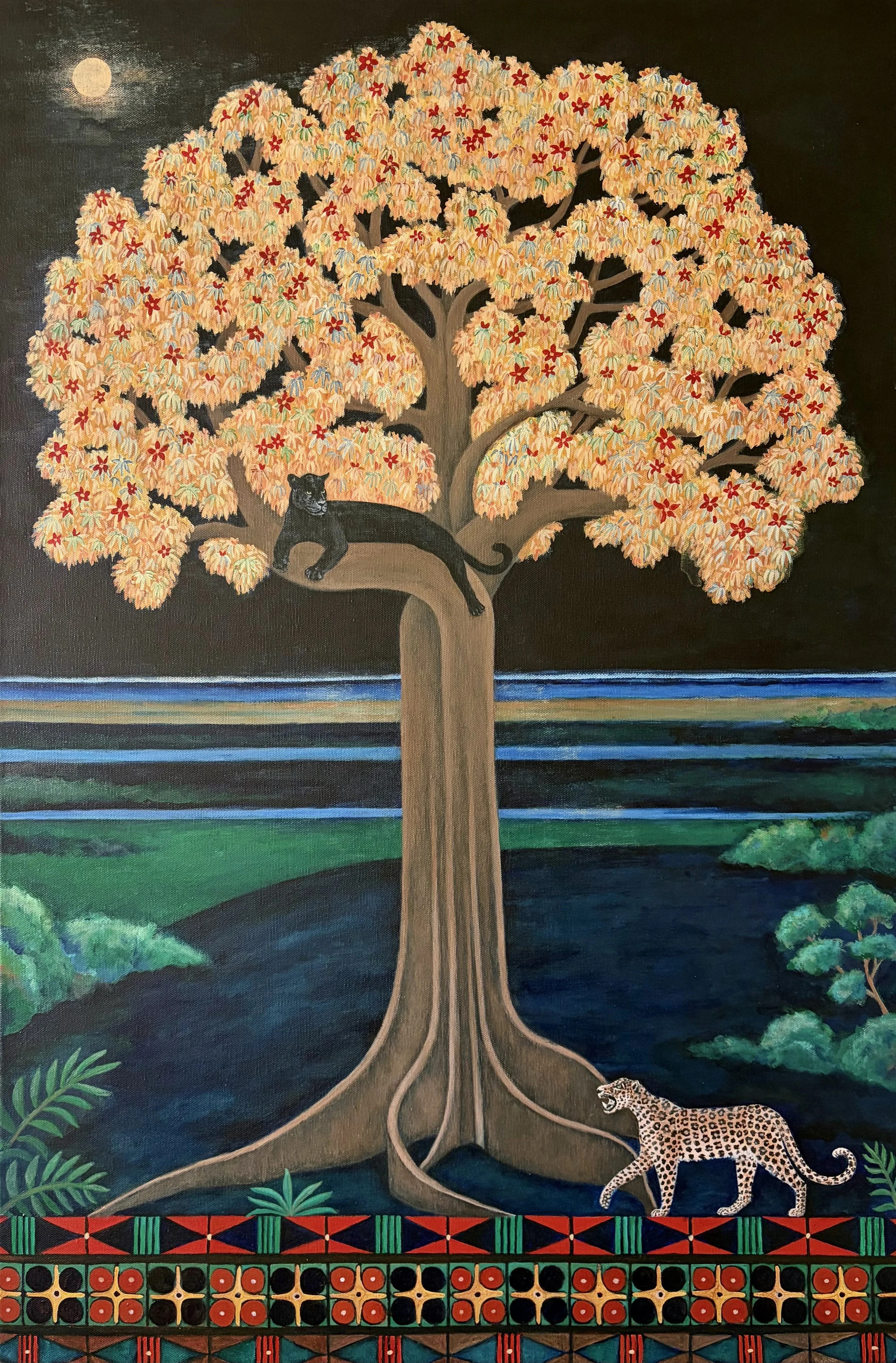
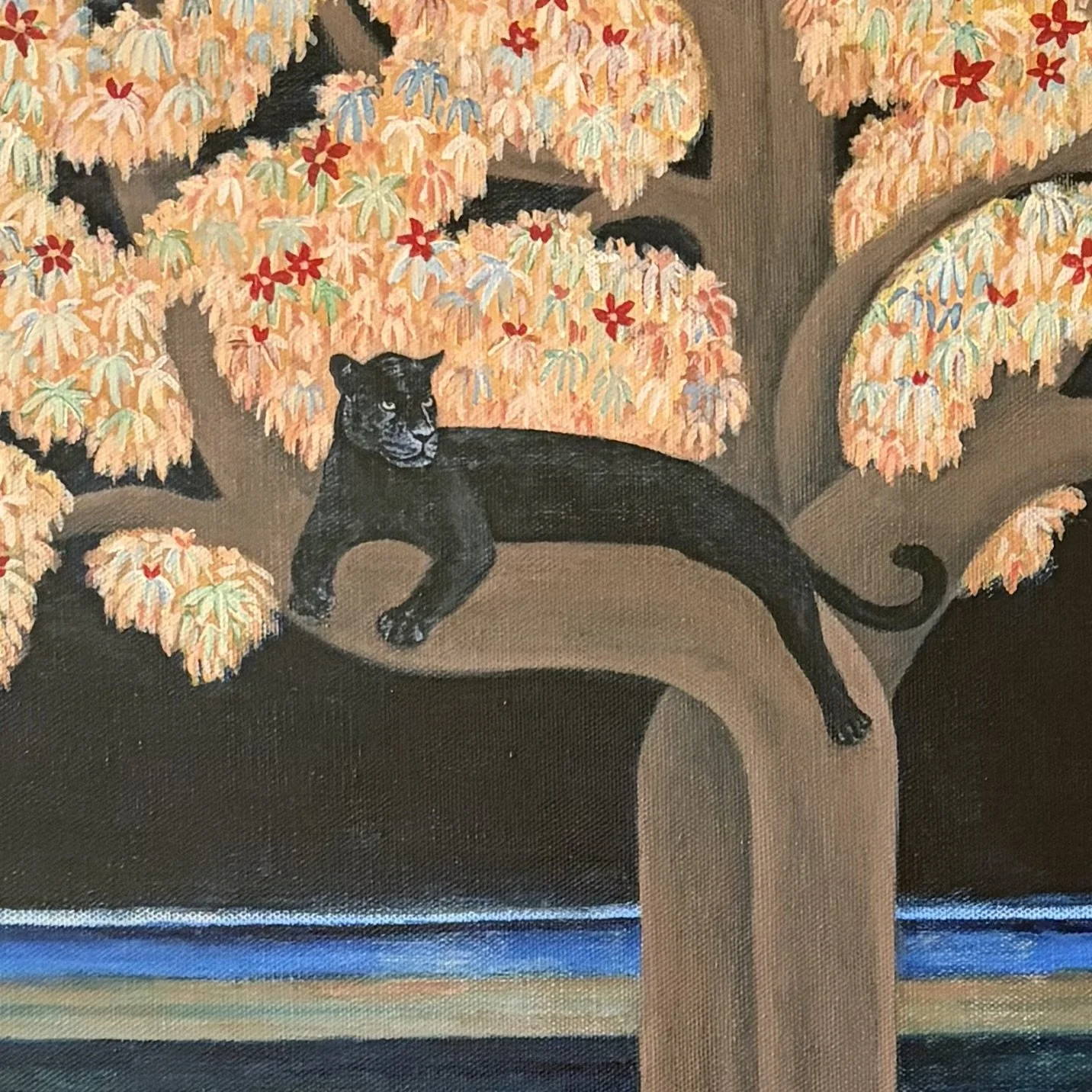
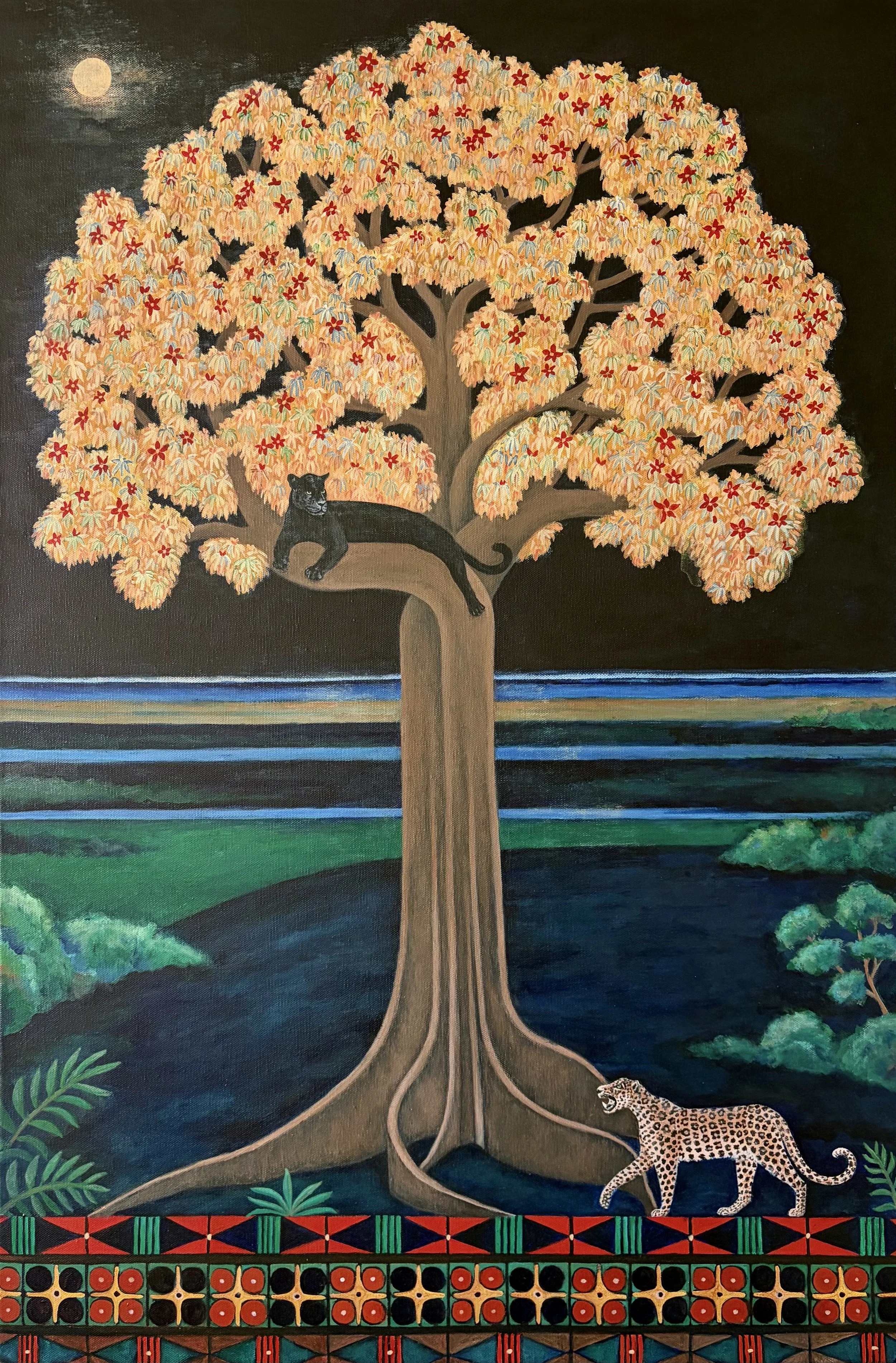
Their eyes meet beneath the ceiba tree.

A hush moves through the roots and rises towards the moon.

The night is holding its breath.

Jaguar Night began with the ceiba tree.

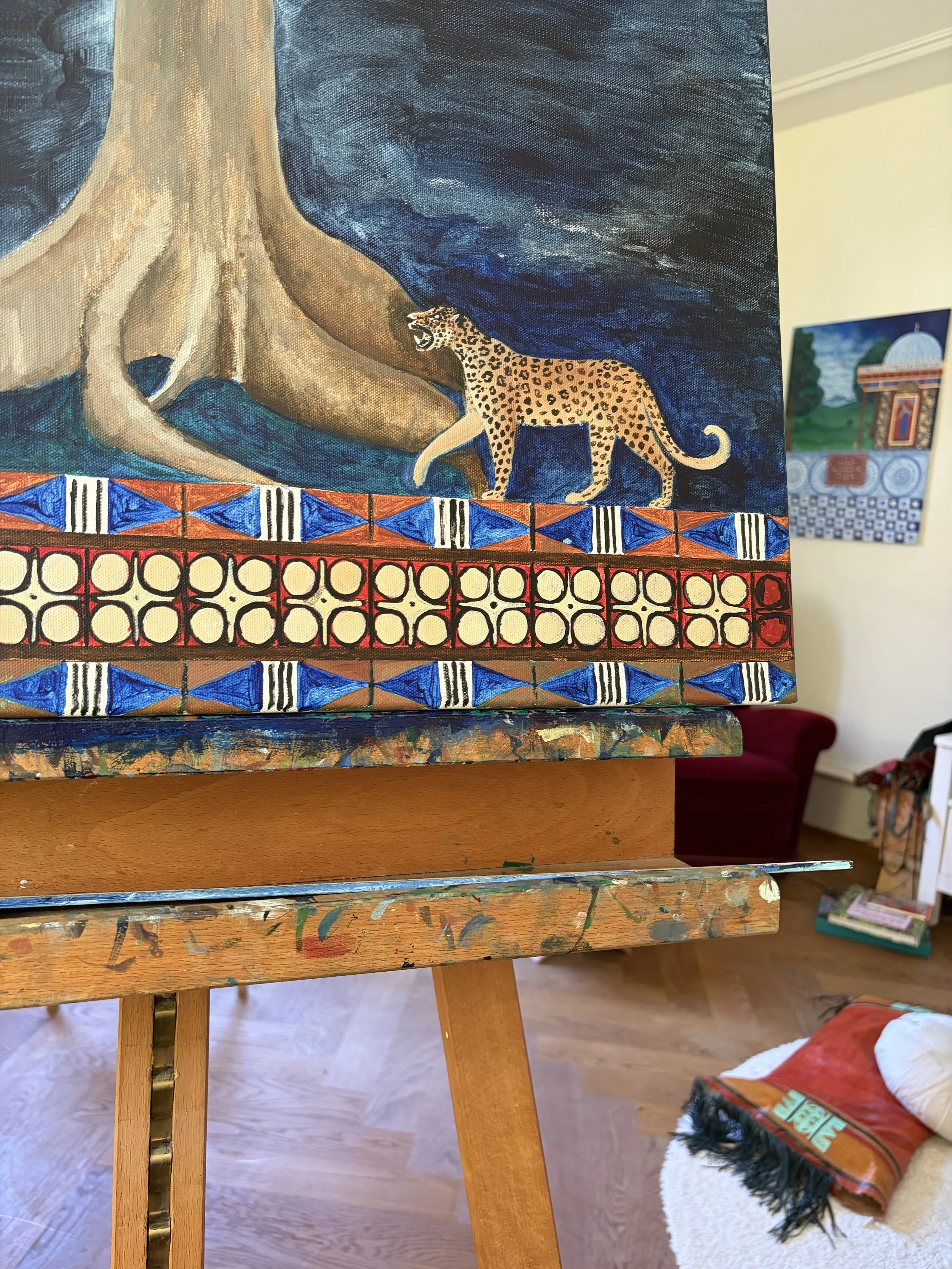
Its roots reach downward into a patterned ground drawing on visual traditions of Indigenous Amazonian art, while its luminous crown rises against the darkness towards a full moon.

Then came the jaguars.

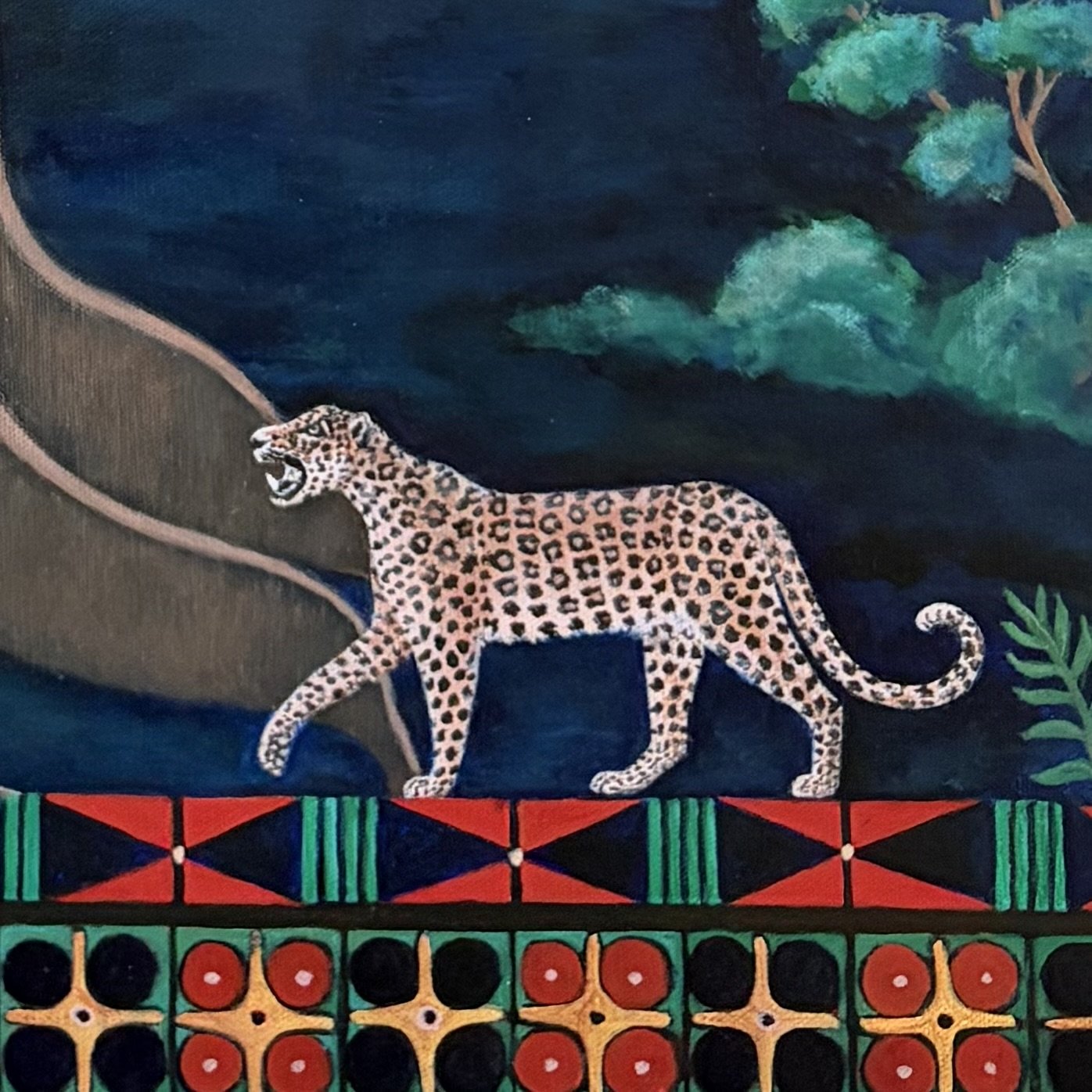
One stands at the foot of the tree, carrying the familiar markings of the jaguar. The other, black and almost absorbed into the night, rests above in the branches.

They look at one another.

I was drawn to the jaguar through its presence in Maya thought: an animal associated with power, darkness, transformation and the ability to move between realms. Those associations gradually found their way into the painting. But what began to matter most was the encounter itself:

The spotted jaguar below, the black jaguar above.

Light and darkness.

Earth and moon.

Two beings separated by only a few meters, yet somehow appearing to occupy different worlds.

And then, for an instant, their eyes meet.

I like to imagine that neither is surprised.

Perhaps they recognize one another.


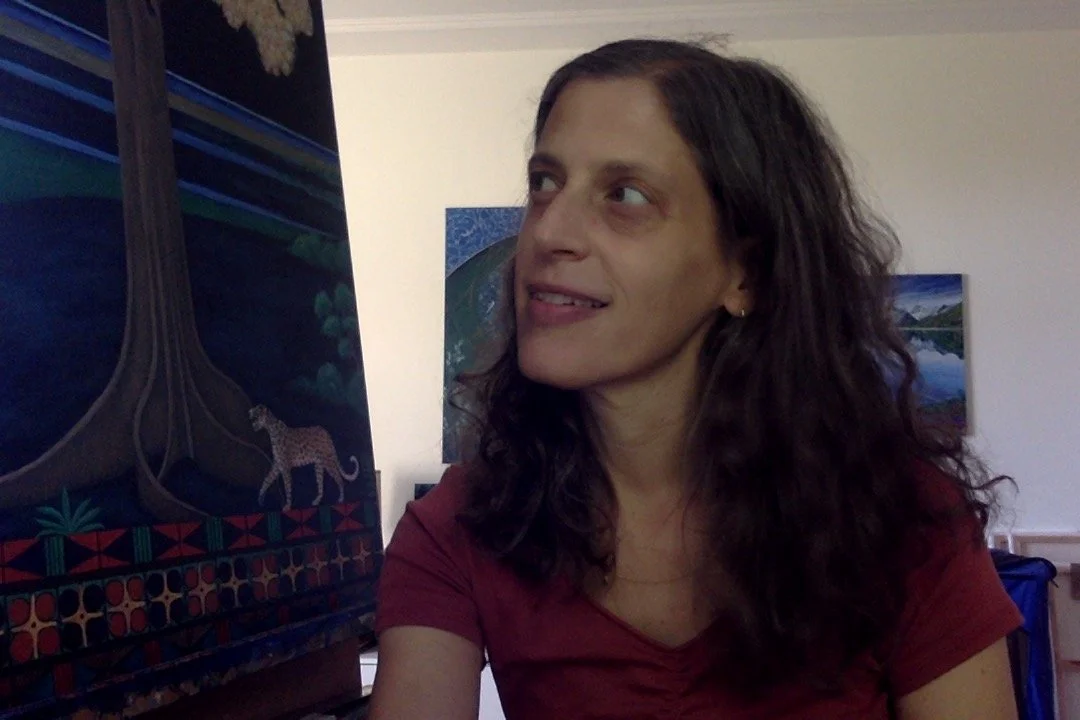
Fragments from the studio:

Comment

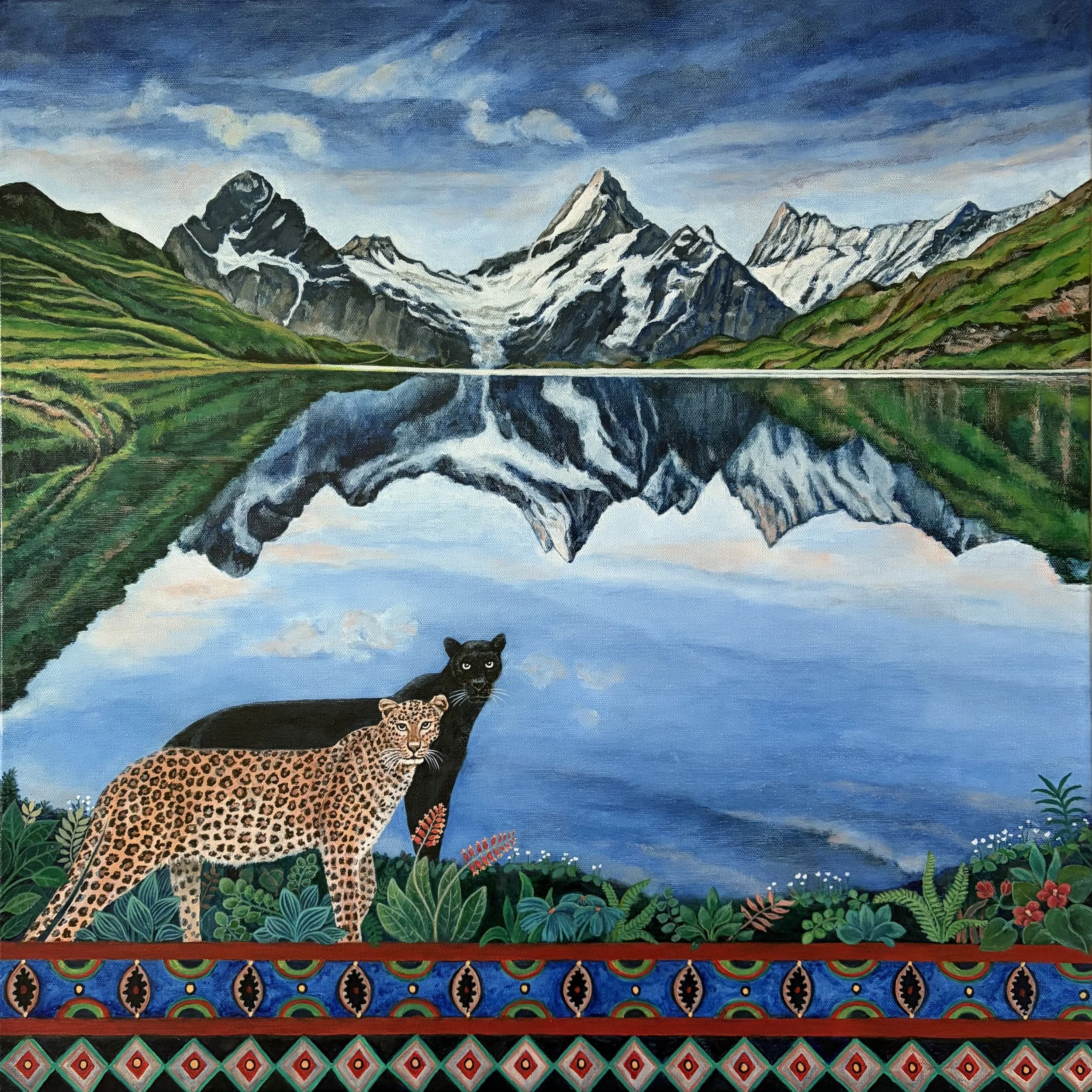
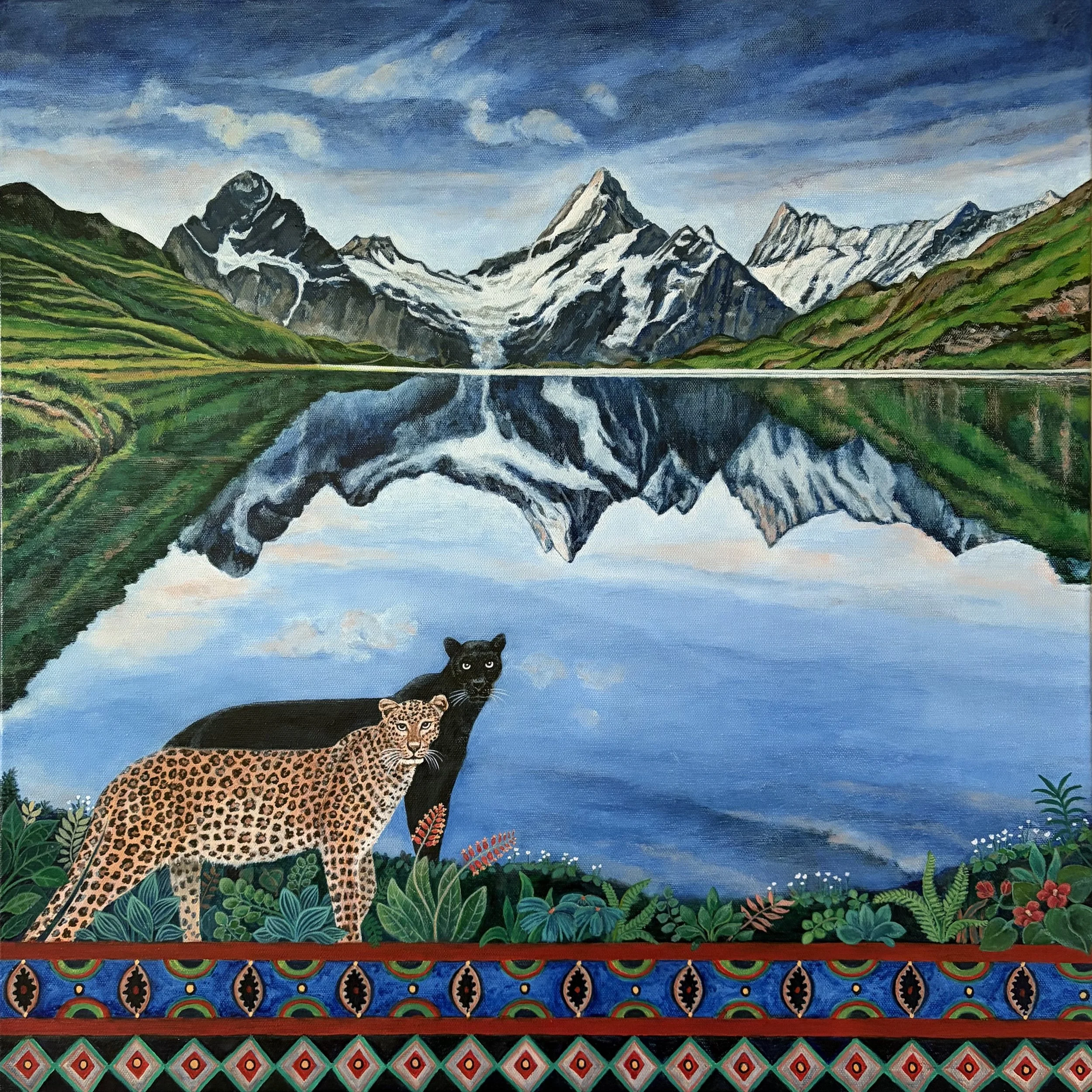
Jaguars in the Alps

Comment

Jaguars in the Alps

We learned to separate worlds.

Nature doesn’t.

Jaguars step into the Alps.

Only we see borders.

The jaguar does not ask whether it belongs.

It does not recognize the invisible lines we have drawn upon maps, ecosystems, or even our imagination. Mountains become mountains. Forests become forests. The living world remains in conversation with itself.

This painting is an invitation to imagine the world differently - to notice how often our ideas of “native” and “foreign”, “here” and “there”, are shaped by history more than by life itself.

As the artist of Apothecarie Artistique, I am drawn to moments where separate stories begin to overlap: Amazonian patterns meeting Alpine landscapes, predators carrying the memory of distant forests into familiar mountains, cultures discovering unexpected reflections in one another.

Comment

Summer Sketches

Comment

Summer Sketches

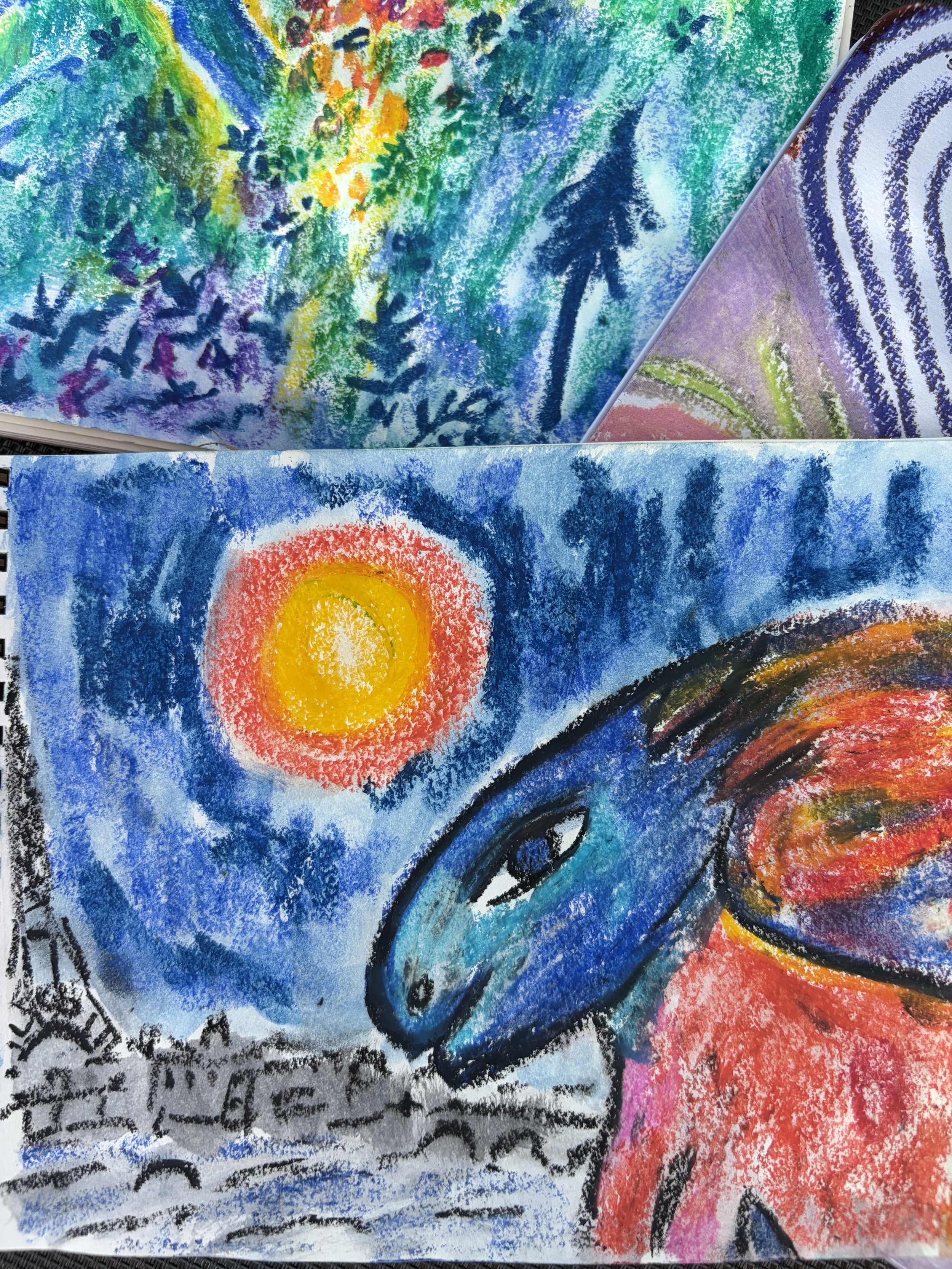
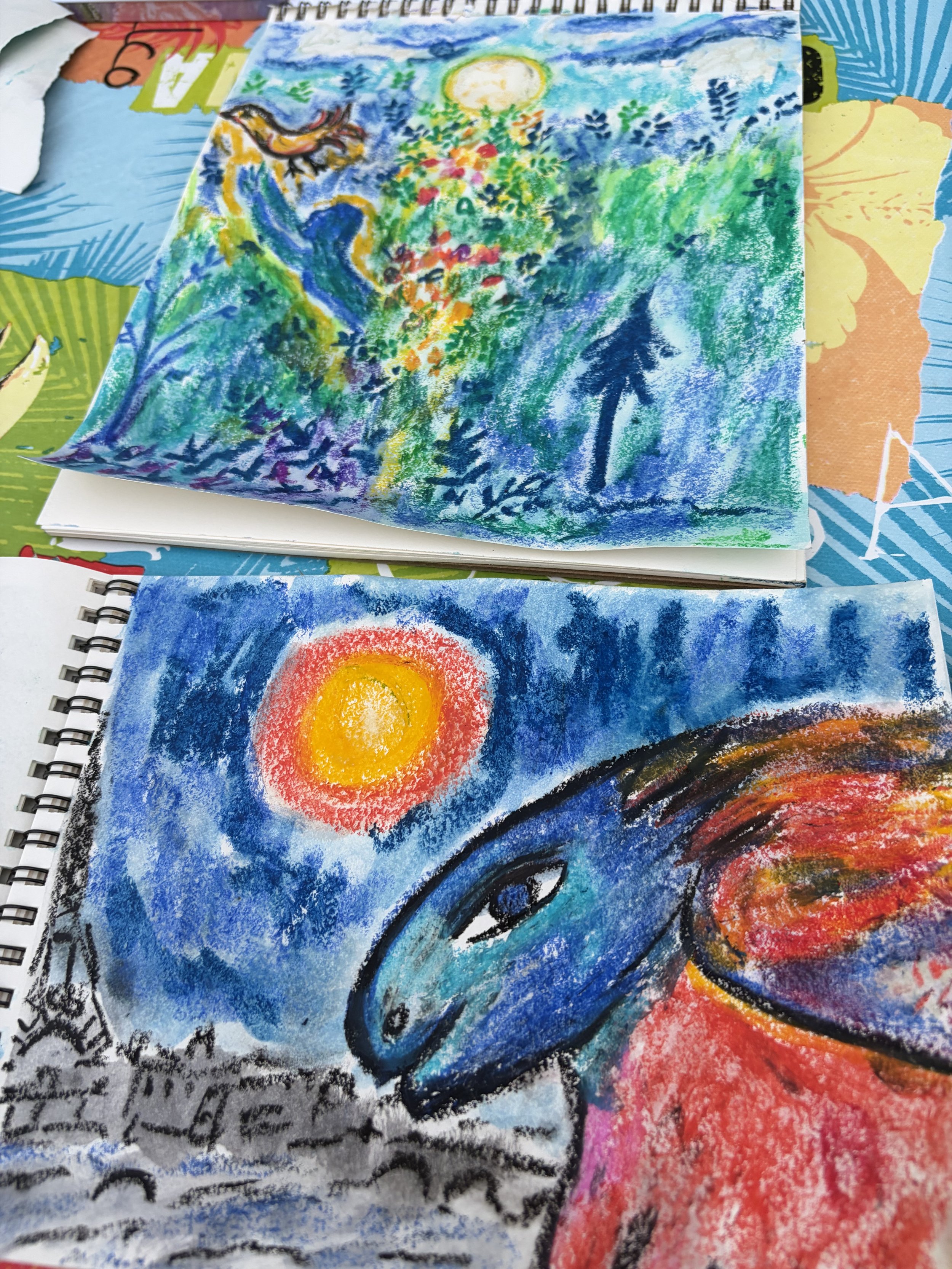
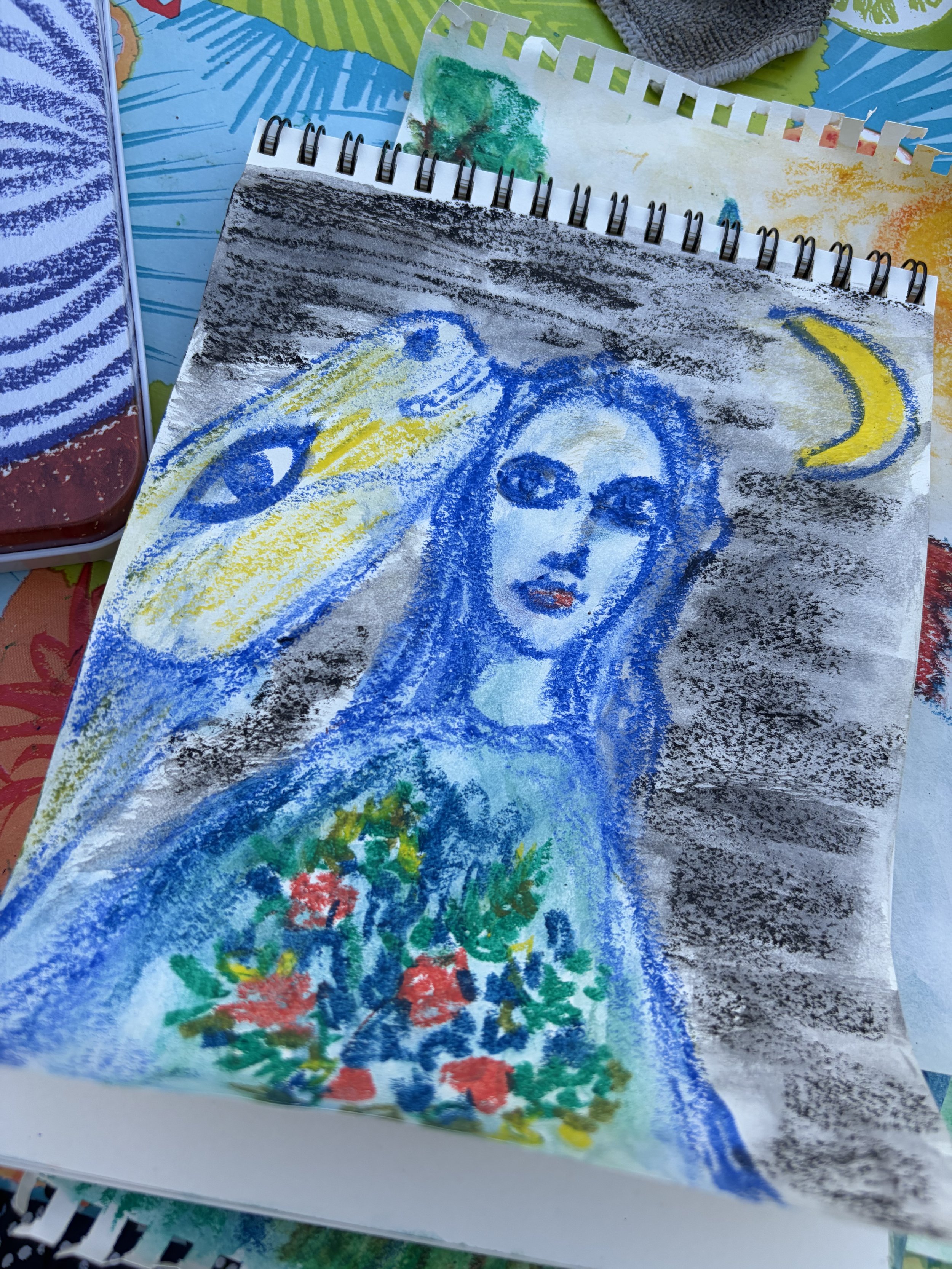
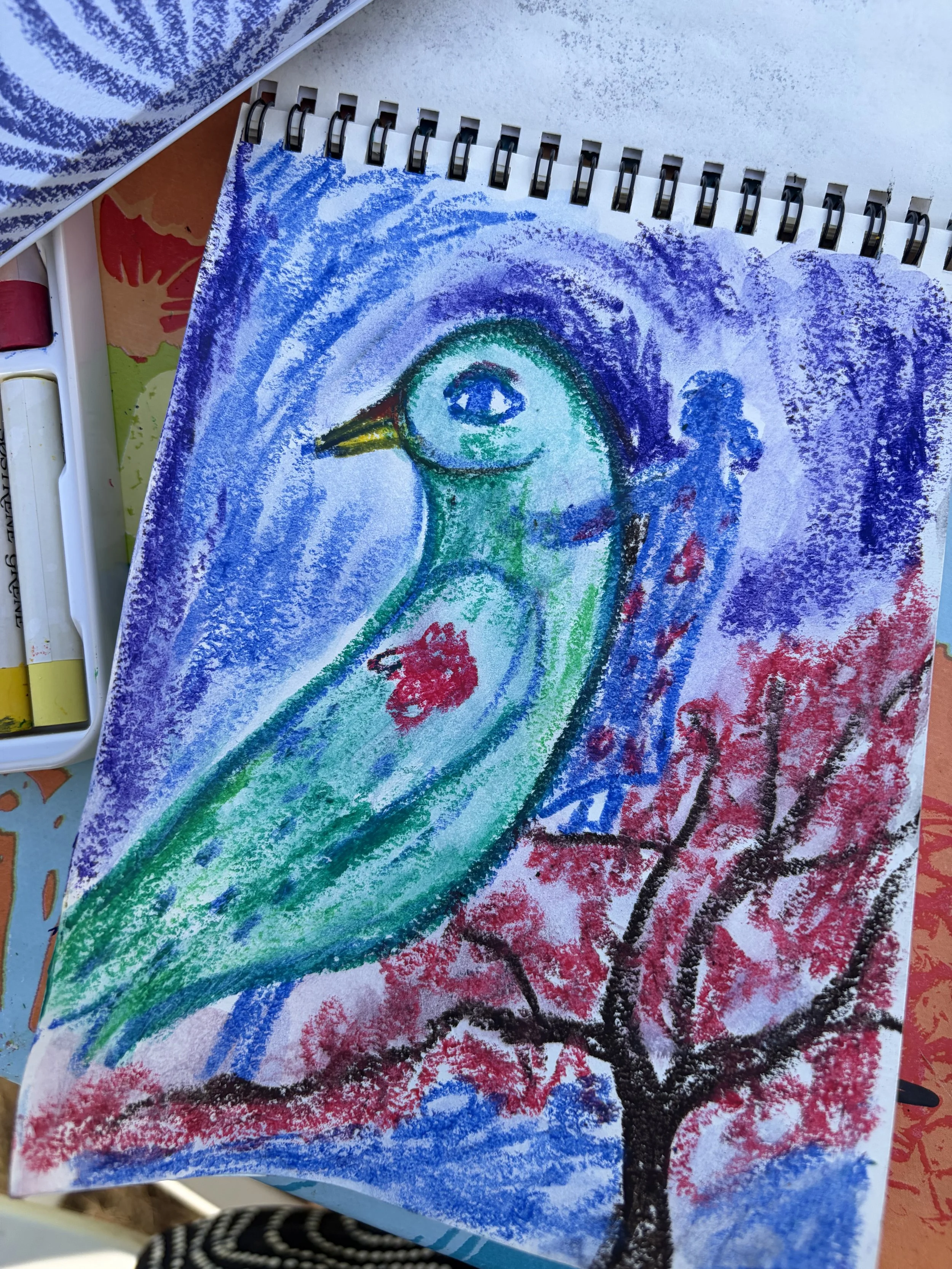
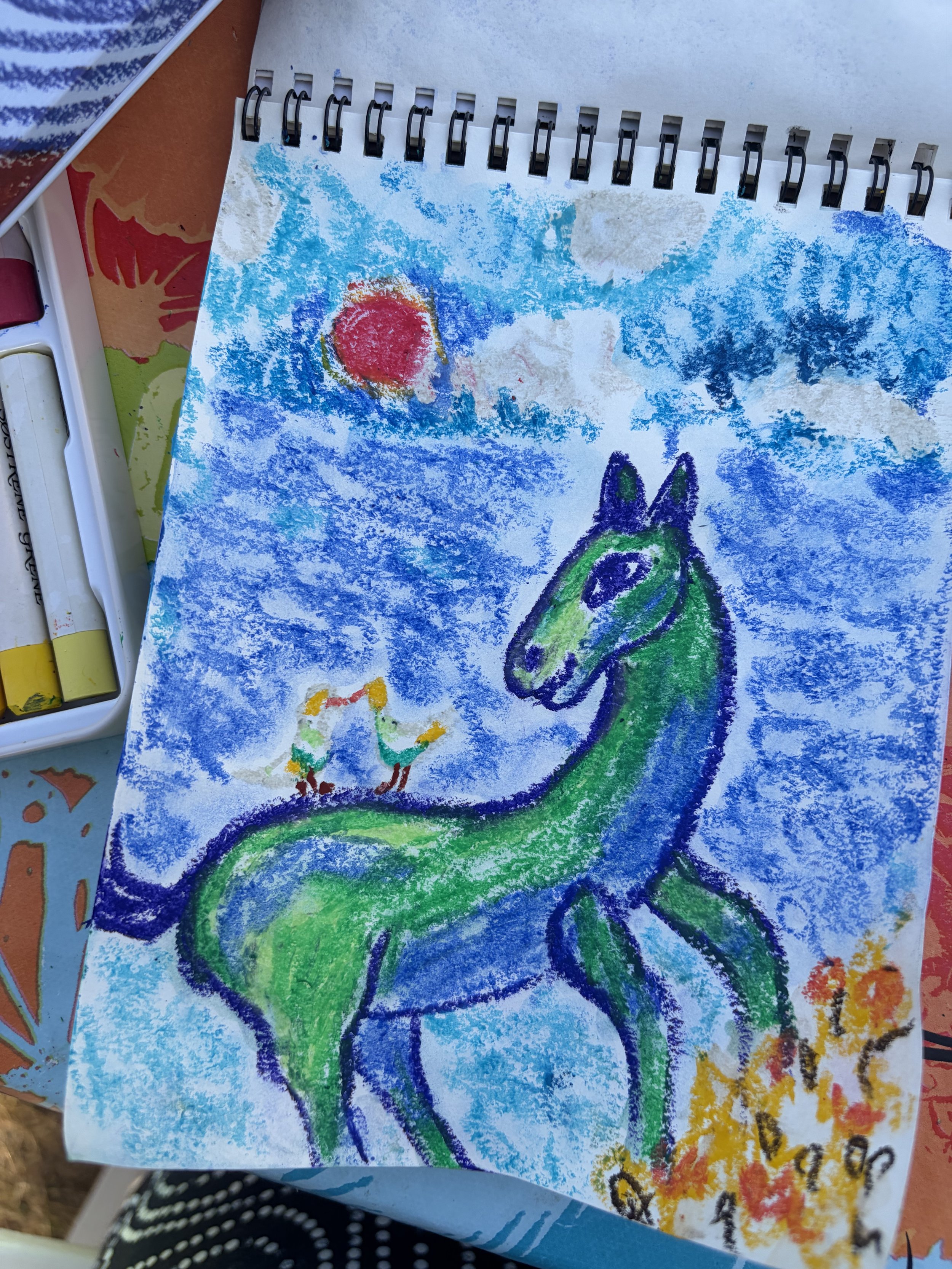
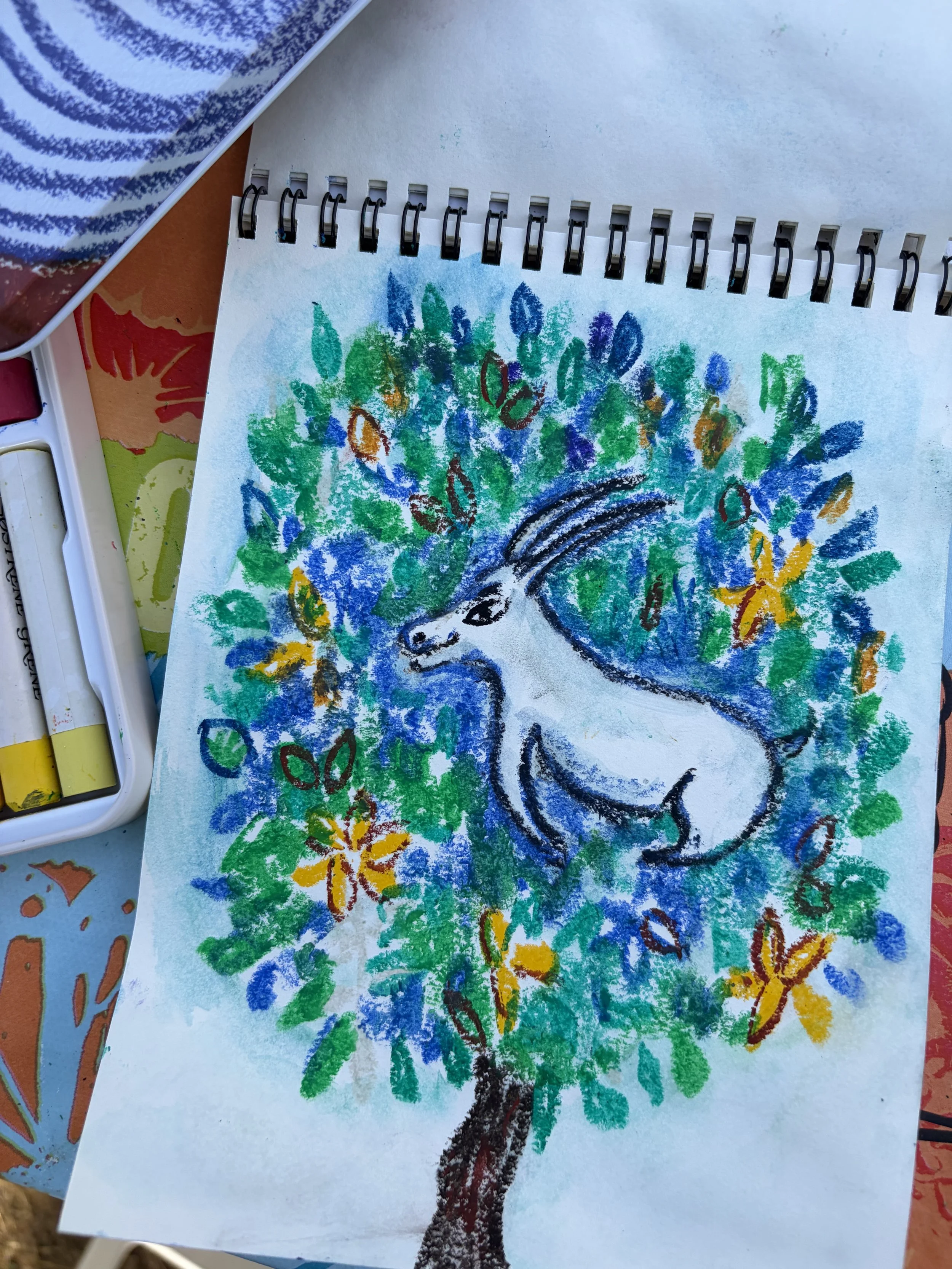
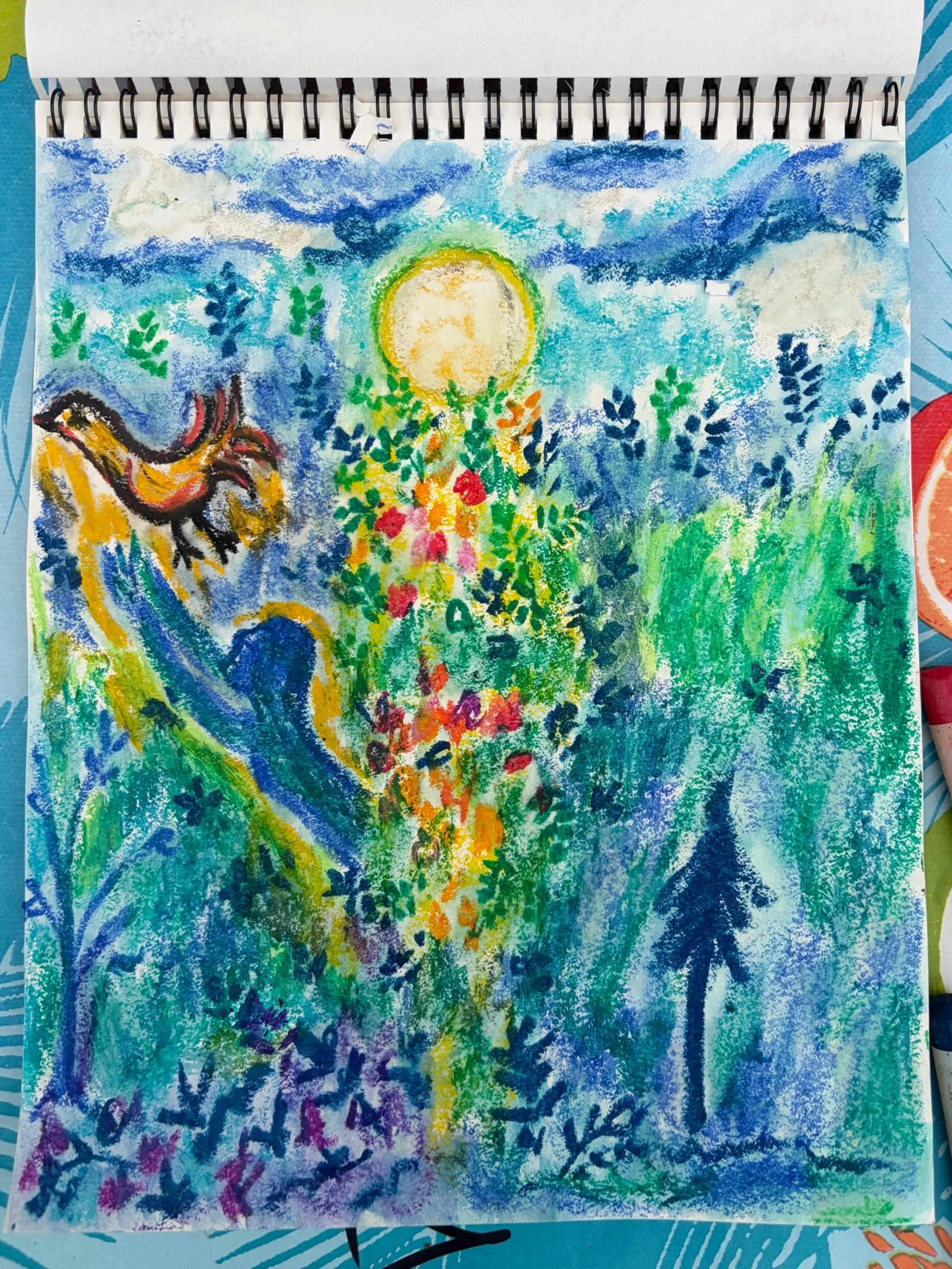
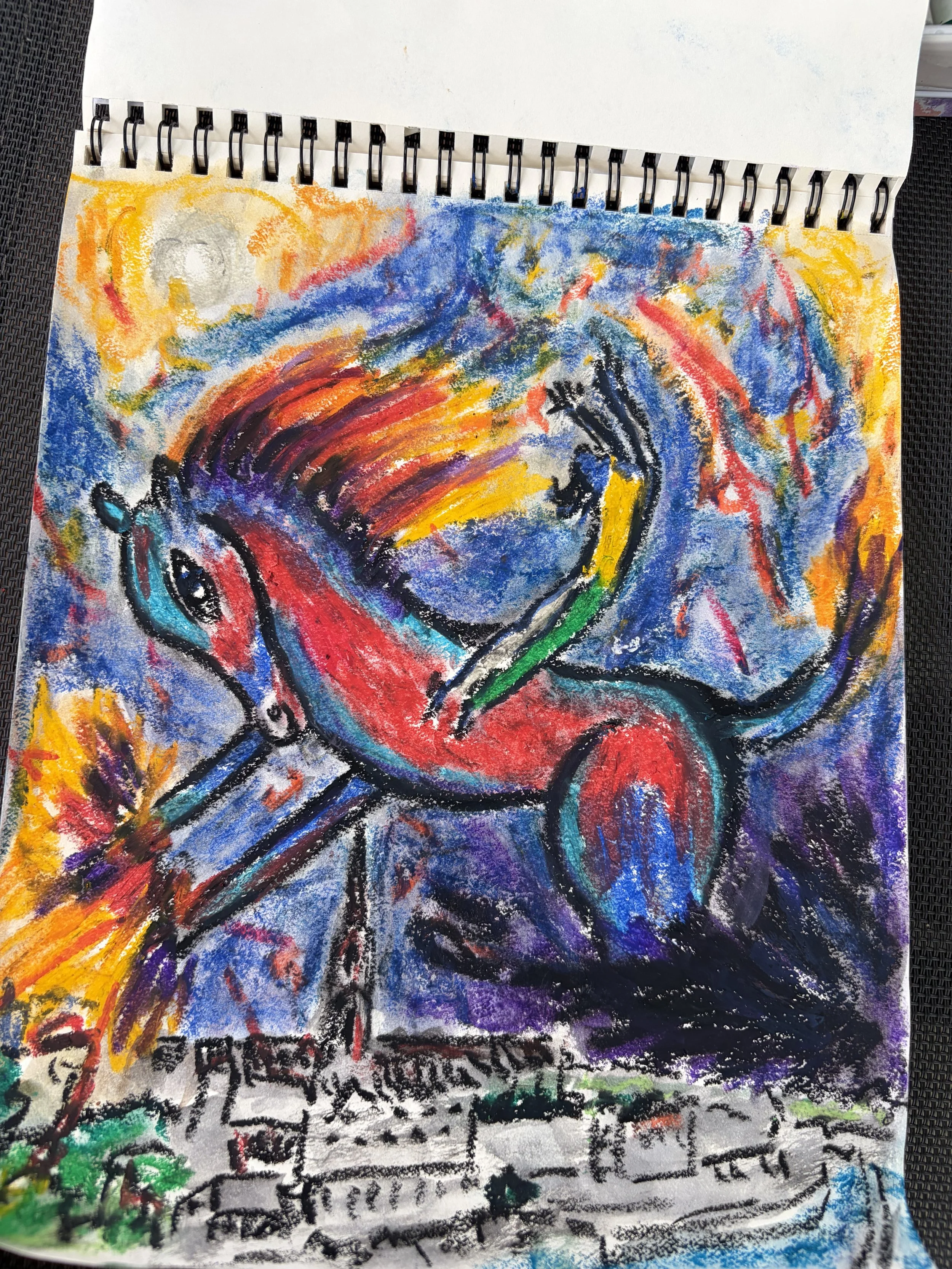
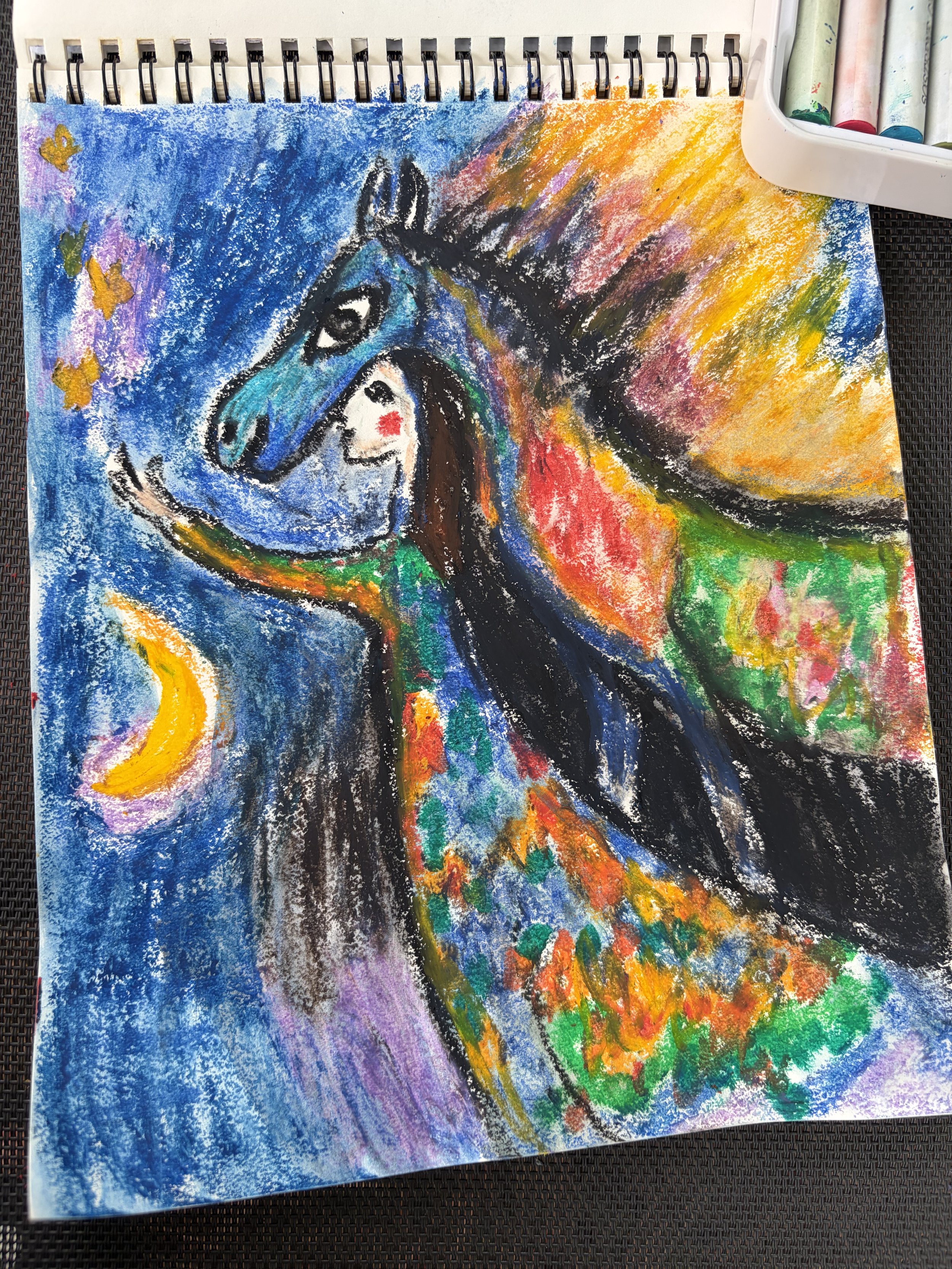
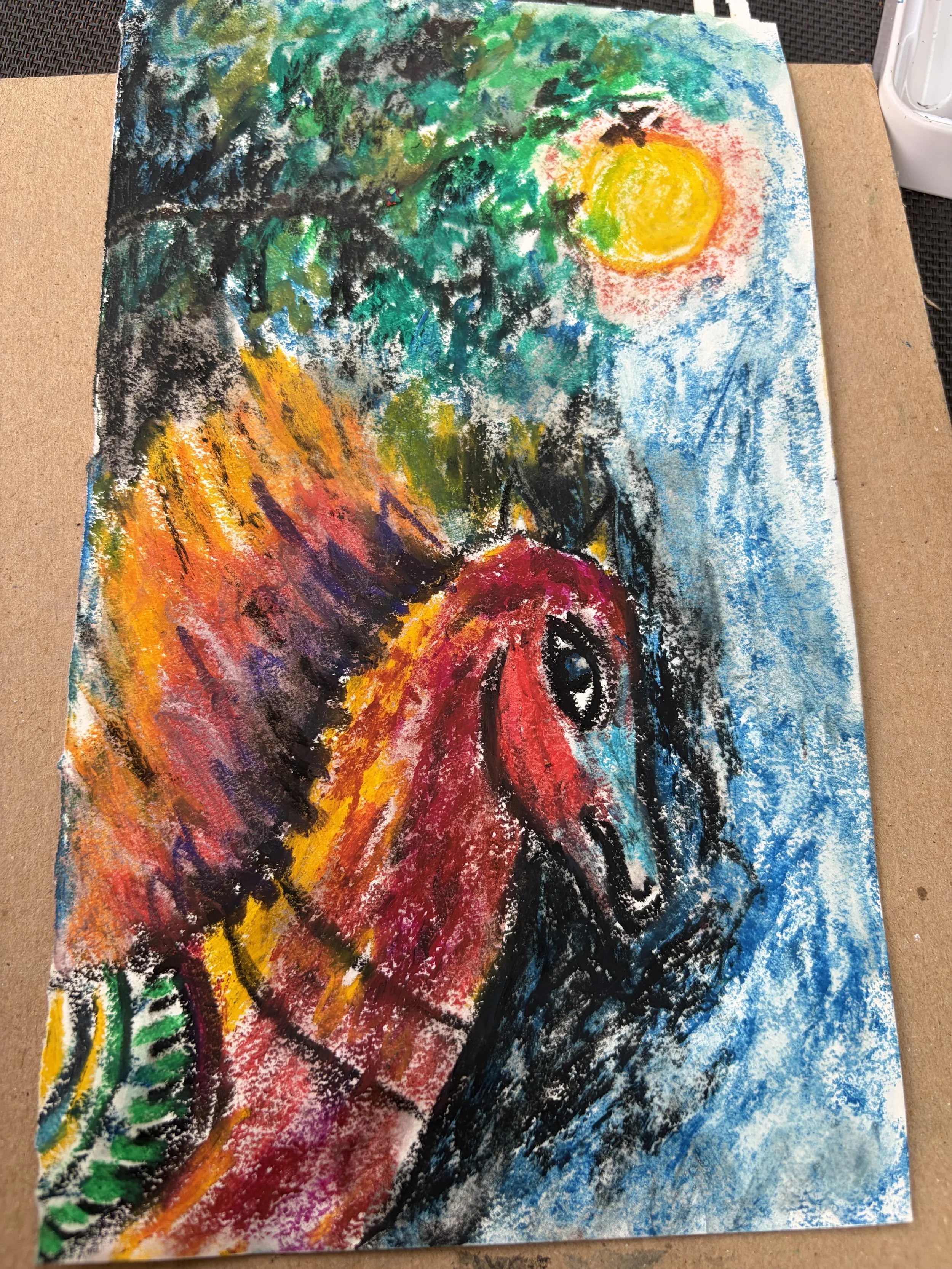
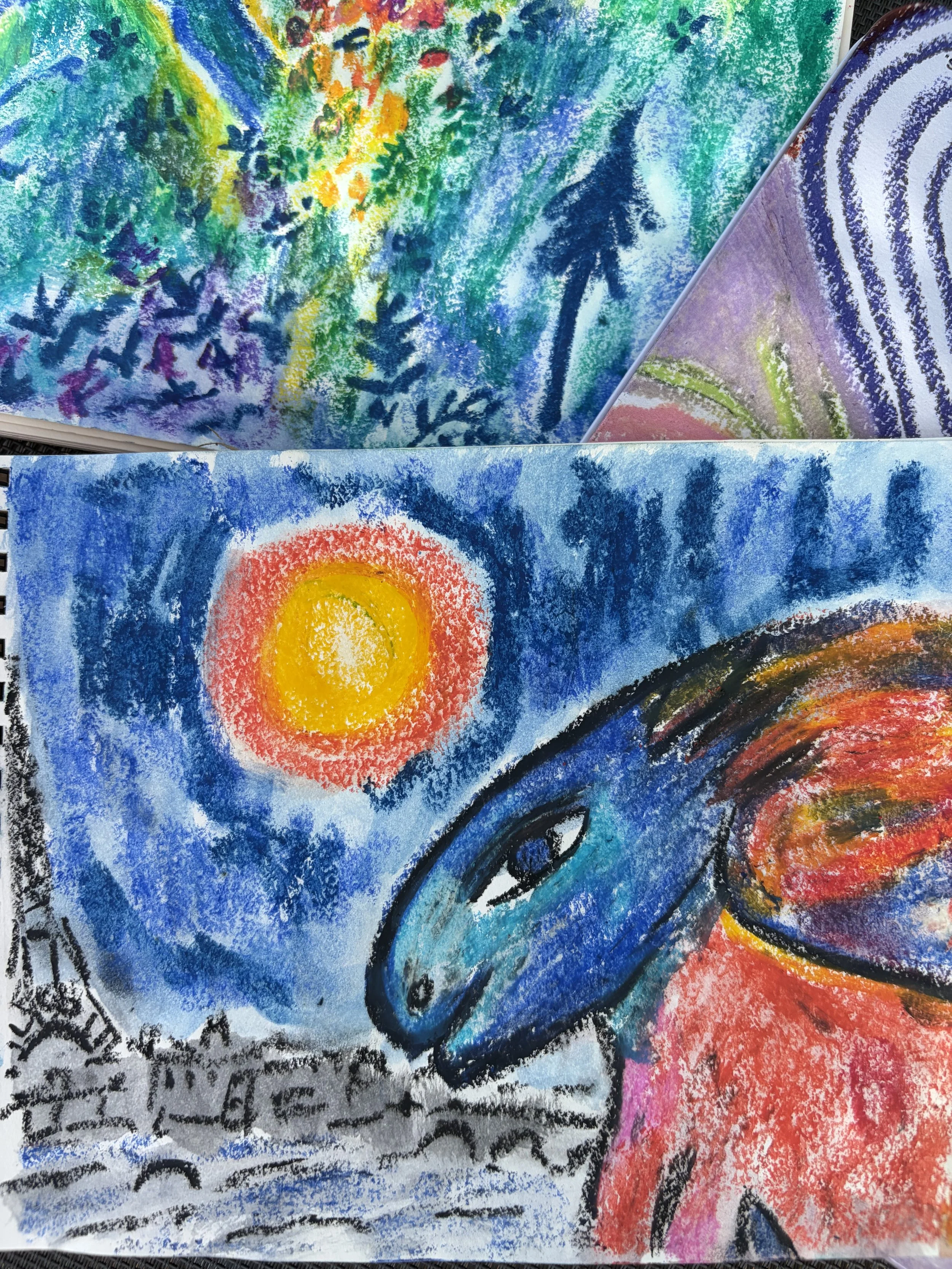
This summer, I found myself returning to wax pastels - its softness, its immediacy, and its willingness to leave room for uncertainty. These sketches were made quickly, often before an idea had fully taken shape. They are fragments of thought and emotion rather than finished statements.

Marc Chagall’s dreamlike world has been a quiet companion throughout this series, reminding me that paintings can drift effortlessly between memory, myth, landscape, and imagination. His work opens a space where animals, people, and symbols coexist without needing to explain themselves.

The year of the Fire Horse. Full flame, full stride. A trusted companion ever untamed.

The Fire Horse’s untamed spirit is not one of rebellion, but of belonging - to the wind, the land, and a way of being that refuses to forget its place within the living world.

Comment